











Integrity builds quality, and quality wins the market.
Promoting green agricultural development through technological innovation.
Categories List
MESSAGE
If you have any questions, please contact us and we will contact you as soon as possible.
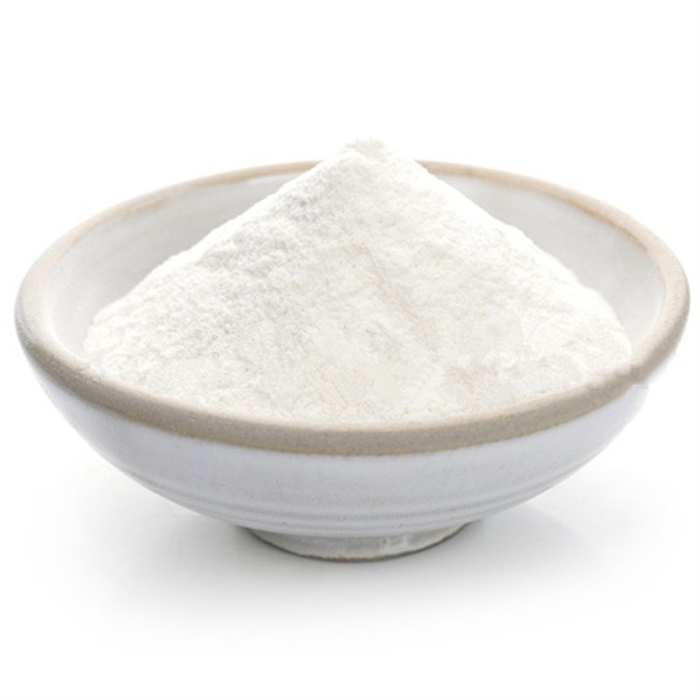
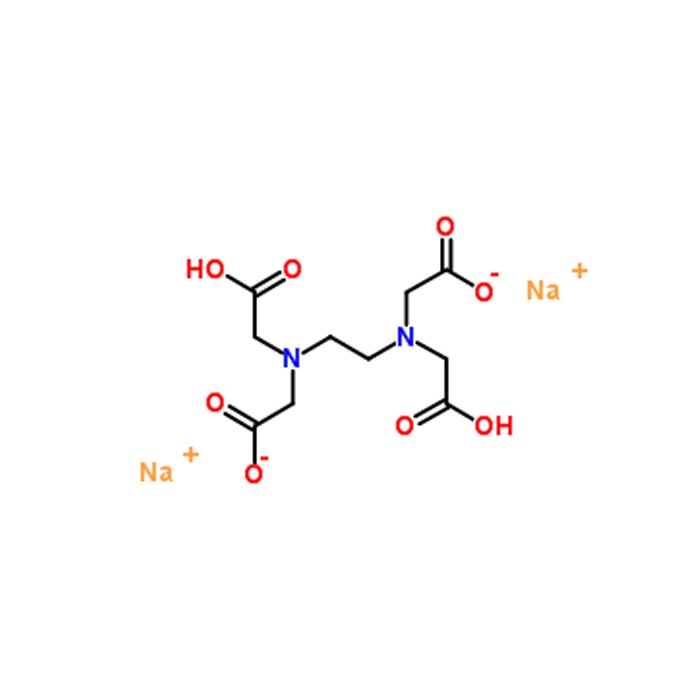
Molecular Formula: C10H14N2Na2O8
Molecular Weight: 336.206
Product Introduction
Disodium ethylenediaminetetraacetic acid (EDTA-2Na) is a valuable chelating agent in chemistry. Its chemical formula is C₁₀H₁₄N₂Na₂O₈, and its molecular weight is 336.206. Its molecular structure contains six coordinating atoms (two nitrogen atoms and four oxygen atoms), allowing it to form stable chelates with metal ions. It has important applications in the dye, food, and pharmaceutical industries.
CHEMICAL PROPERTIES
PRODUCT USAGE
1. Food industry: Cadmium (Cd2+) in rice protein (RPs) can be removed by soaking in a solution of disodium ethylenediamine tetraacetate (EDTA-2Na).
Disodium EDTA can form stable water-soluble complexes with almost all metal ions. Its chelating effect can eliminate food turbidity, deterioration, discoloration, and vitamin oxidation loss caused by metal ions, thus playing a role in color protection, stabilization, antioxidation, and preservation of food. Therefore, as a color preserver, quality improver, and synergistic antioxidant, it is often widely added to food.
According to GB 2760—2014, disodium EDTA can be used in jams, vegetable purees, or sauces (excluding tomato sauce) with a maximum usage of 0.07g/kg; in preserved fruits (limited to sweet potato preserves), pickled vegetables, canned vegetables, canned nuts and seeds, and canned grains with a maximum usage of 0.25g/kg; in compound seasonings with a maximum usage of 0.075g/kg; and in beverages (excluding packaged drinking water) with a maximum usage of 0.03g/kg. Additionally, GB 2760—2014 stipulates that calcium disodium EDTA can be used as an antioxidant in compound seasonings with a maximum usage of 0.075g/kg.
2. Industrial field:
It is used in chemical copper plating, gold plating, lead-tin alloy plating, electrochemical polishing of steel parts, and in the solution before silver plating of copper parts. It can also be replaced by EDTA-2Na. It is also used in detergents, liquid soaps, shampoos, agricultural chemical sprays, color photographic materials processing and bleaching fixing solutions, leaching of valuable metals from waste batteries, water purifying agents, pH regulators, and coagulant inhibitors. In the chemical reduction initiation system used in styrene-butadiene rubber polymerization, EDTA disodium serves as a component of the activator, mainly used to complex ferrous ions and control the polymerization reaction rate.
3. Pharmaceuticals and scientific research:
Analytical chemistry: determination of metal ion content by complexometric titration.
Food testing: The most common method for detecting disodium EDTA in food is high-performance liquid chromatography (HPLC). In addition to this method, other methods include ion chromatography, titration, colorimetry, thin-layer chromatography, and liquid chromatography-tandem mass spectrometry.
Factory Showcase

FAQ
Q: Are you a factory or a trading company?
A: We are a company integrating manufacturing and trading.
Q: Can you provide samples for testing before mass production?
A: Of course. We can send you samples free of charge, and we also include a COA. However, you will be responsible for the shipping fee.
Q: How can I get an accurate quote?
A: Please provide the exact product specifications, particle size, color, and intended use, and we will provide you with an accurate quote.
Q: Can you provide a COA?
A: Of course, but only for standard products. If you require an accurate COA, we will produce and test samples before providing you with an accurate COA.
Q: Do you accept ODM or OEM services?
A: Yes, we offer customized services for ingredients, packaging, and labeling. We have strong design capabilities. Please contact us to design your own brand.
Q: Can I visit your factory before placing a large order?
A: Of course. We welcome you at any time.
Q: What is the loading port?
A: Usually Qingdao or Tianjin.
Message
What are you lookking for?